

A wolf dream meaning can linger long after you wake. Wolf dream meaning starts with the details that stay with you: eyes in the dark, paws behind you, or the surprising comfort of a wild animal at your side. Were you frightened, curious, or relieved? Being chased can invite reflection on pressure; a welcoming pack can raise questions about belonging. Neither establishes that betrayal or danger is coming.
This guide explores familiar scenarios, compares psychological and cultural interpretations, and makes room for something dream dictionaries often overlookyour own relationship with the wolf, and the feeling you carried into morning.
Quick Answer
A wolf dream can invite reflection on instinct, perceived threat, independence, protection, or belonging. Wolf dream meaning is best explored through the animal’s behaviour, your emotions, and your personal associations rather than a universal colour code. A friendly black wolf and an attacking white wolf illustrate why colour alone is insufficient. These are possible interpretations, not evidence that someone will betray you or that a future event will occur.
Wolf Dream Meaning: Instinct, Protection and Belonging
Common symbolic interpretations of wolf dreams centre on instinct, protection, independence and belonging, with threatening encounters read differently from reassuring ones.
What does a lone wolf mean in a dream?
Picture a wolf crossing a snowy field alone. Independence feels appealing until it turns into abandonment.
Peaceful solitude might resonate when you need breathing room. If solitude feels lonely, consider whether isolation is outweighing your enjoyment of being alone.
What does joining a wolf pack mean?
You’re running beside a pack, keeping pace. That acceptance is worth noticing after joining a workplace or friendship circle.
Being surrounded by growling wolves feels different. Group pressure becomes a useful theme: the same pack imagery can feel welcoming or suffocating.
What does a friendly or protective wolf mean?
Perhaps a wolf settles beside your doorway, and you finally relax. Think about trusted strength, loyalty and support. Who helps you feel safe? Are you protecting your own boundaries?
What does becoming a wolf mean?
Running through the forest on four legs feels effortlessor frightening.
Explore freedom, instinct and control. Becoming an ordinary wolf differs from a werewolf transformation wrapped in shame or fear of harming others.
Wolf dream meaning at a glance.
| Lone wolf | Independence or isolation | Peace versus loneliness |
| Joining a pack | Belonging or conformity | Acceptance versus pressure |
| Protective wolf | Support or personal boundaries | Companionship versus active defence |
| Becoming a wolf | Instinct or transformation | Freedom versus loss of control |
Your feelings give wolf dream meaning its personal context.
What Does It Mean When Wolves Chase, Attack or Bite You?
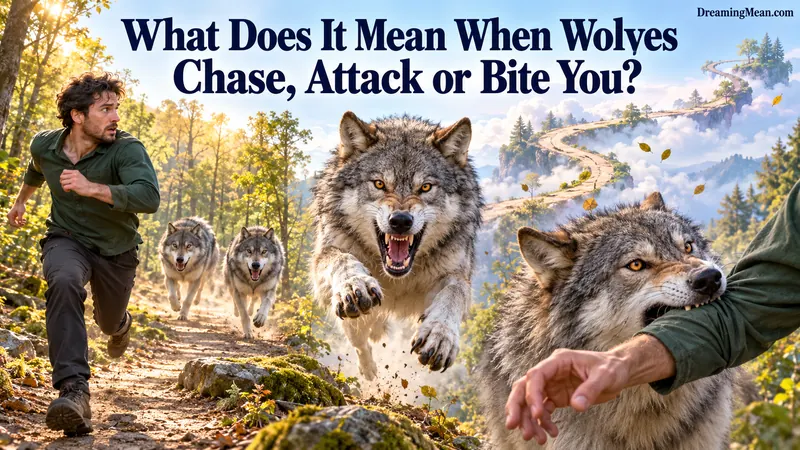
Dreams of wolves chasing, attacking or biting you invite reflection on fear, pressure and vulnerability; they do not identify a real world threat.
Notice the sequence: watching from the trees, following you home and actively chasing you describe different encounters.
A wolf chases you but never catches you
You reach a locked gate. Behind you, paws strike the ground. The wolf keeps coming.
Does that urgency feel familiar? Consider an approaching deadline or a conversation you keep postponing. Escaping, freezing and finding help each change the experience.
A wolf attacksor a pack surrounds you
One wolf lunging creates a focused threat. A pack blocking every exit adds the feeling of being outnumbered.
Does that resemble a tense meeting or family argument? Follow the emotional connection carefully; the dream cannot identify a hidden enemy.
A wolf bites your hand
Were you feeding the wolf, defending yourself, or reaching towards a cub?
A bite during caregiving raises different questions from a bite during self defence. Feeling vulnerable while helping someone might resonate. Avoid assigning a fixed meaning to the body part.
A wolf howls while you watch from safety
A distant howl reaches you through a closed window. Beautifulor frightening?
Were you listening for company or longing to answer? Howling invites questions about communication and connection; your reaction supplies the personal detail.
Does Colour Change Wolf Dream Meaning?
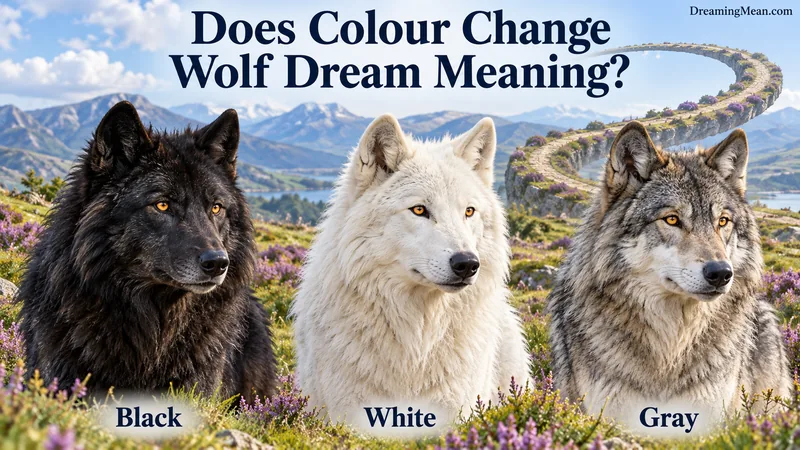
Wolf colour doesn’t establish a universal dream interpretation; behaviour, emotional tone, and personal associations provide additional context.
What does a black wolf mean?
A black wolf slipping into shadow can feel mysterious; walking beside you, reassuring.
The “shadow self” is one psychological lens, not a synonym for evil. What did darkness feel like: frightening, private or restful?
What does a white wolf mean?
A white wolf leading you through snow creates a different encounter from one chasing you across an empty field. Dream dictionaries associate white wolves with both protection and isolationa useful reminder that colour meanings disagree. (Wolf Stuff; Auntyflo
Winter, clarity or distance might matter more to you than a simple “white equals good” rule.
What does a grey wolf mean?
A grey wolf may resemble familiar photographs. Every detail doesn’t need to carry an extra message.
If the wolf stands among its pack, consider its social relationships. Grey itself does not establish emotional balance.
Explore wolf dream meaning through behaviour before interpreting colour.
Wolf Dream Meaning in Psychology and Cultural Traditions
Psychological theories examine dreams through waking experiences or symbolic conflicts, while religious interpretations depend on particular texts and traditions.
Keep the claims distinct: research findings, symbolic readings and religious teachings carry different kinds of authority.
Can a wolf dream reflect waking life experiences?
Michael Schredl and Friedrich Hofmann’s research supports connections between waking activities and dreams, with methodological limits. Everyday context matters, but the research does not establish wolf symbolism. (Schredl and Hofmann (2003): Continuity between waking activities and dream activities
A documentary after a stressful workday gives you two threads to follow. Start with the everyday context.
How would a Jungian interpretation approach an angry wolf?
In Carl Jung’s framework, the shadow includes qualities outside conscious self recognition, including rejected traits and strengths. Jungian sources discuss dreams as one way to explore those qualities. (International Association of Analytical Psychology: The Shadow
A wolf snapping at everyone invites a Jungian question about aggression or assertiveness you struggle to acknowledge.
This is an application of Jungian theory, not a fixed interpretation established by the cited source.
What does wolf imagery mean in biblical interpretation?
Matthew 7:15 uses wolves concealed beneath sheep’s clothing as a metaphor for false prophets. The passage concerns deceptive appearances; it does not prescribe the meaning of a wolf dream. (Matthew 7:15
If wolves and sheep appear together, that story may feel relevant to your faith background. Let the association prompt reflection, without turning it into an accusation against someone.
What should an Islamic interpretation consider?
Islamic teaching distinguishes dream types before interpreting symbols. Sahih Muslim 2263a describes good dreams bringing glad tidings from Allah, distressing dreams from Satan, and dreams arising from a person’s own thoughts. (Sahih Muslim 2263a
In Surah Yusuf 12:17–18, Joseph’s brothers claim a wolf devoured him and present false evidence. The wolf is part of their account, not a universal dream interpretation instruction. (Surah Yusuf 12:17–18
Religious interpretation needs careful attribution; “Arabic culture” and Islamic teaching are not interchangeable.
Indigenous peoples also have distinct traditions. A sweeping statement about “Native American wolf beliefs” loses that important specificity.
Why Do You Keep Dreaming About Wolves?
Recurring wolf dream meaning allow you to compare repeated emotions, circumstances and endings; recurrence alone does not establish a warning or one fixed meaning.
The same wolf repeatedly chases you
Note when the dream happened, how you felt, and what was happening that week. Does the pursuit follow demanding days? Has the setting changed?
Leave the question open when no connection appears. You needn’t manufacture an explanation.
A threatening wolf becomes friendly
The wolf used to growl. This time, it lets you approach.
Perhaps you stop running, speak to it, or feel less afraid. A gentler encounter is worth reflecting on, even though it cannot prove that emotional healing has occurred.
You feed or help an injured wolf
You offer food, or kneel beside a wolf with an injured paw. Fear gives way to carebut helping might also feel risky or compulsory.
Dream Studies writer Ryan Hurd describes feeding attacking wolves in a lucid dream and experiencing a less frightening relationship afterwards. His account offers an interesting example, not a guaranteed technique. (Ryan Hurd: The Wolves and the Gift)
If recurring nightmares disrupt sleep or cause substantial distress, speak with a healthcare professional. Treatments for distressing nightmares are available. (American Academy of Sleep Medicine: treatment options for nightmare disorder
How Can You Interpret Your Own Wolf Dream?

Interpret your wolf dream by recording the animal’s behaviour, your strongest emotion, your response and relevant waking experiences before choosing a symbolic explanation.
Three comparisons help keep the details in view:
- Friendly black wolf versus attacking white wolf: colour alone cannot explain the emotional difference.
- Peaceful lone wolf versus lonely outsider: being alone can feel chosen or imposed.
- Welcoming pack versus threatening pack: belonging to a group differs from feeling cornered by one.
Record dream journal details while they’re fresh.
| Behaviour | Watching, chasing, protecting | What changed during the encounter? |
| Emotion | Fear, relief, curiosity | Where else do I recognise this feeling? |
| Your response | Running, joining, feeding | Did I feel willing, trapped or in control? |
| Personal association | Pet, film, story, belief | What do wolves already mean to me? |
| Ending | Escape, injury, companionship | How did the final feeling differ? |
“The wolf blocked the door” records an observation. “The wolf represented my boss” adds an interpretation. Recognise the difference.
Write before consulting a dream dictionary. Your own associations deserve room before someone else’s explanation takes over.
Frequently Asked Questions About Wolf Dreams
Is dreaming about wolves a good or bad sign?
Wolf dream meaning cannot be reduced to a good or bad omen. A protective encounter and a frightening pursuit invite different reflections, but neither establishes what will happen next in your waking life.
Does a wolf dream mean someone will betray me?
A wolf dream alone is not evidence that someone will betray you. Dream imagery can prompt questions about trust, but another person’s intentions should be assessed through waking behaviour, communication and concrete evidence.
Why do I keep dreaming about wolves?
Recurring wolf dreams are best explored by comparing repeated feelings, recent experiences and changes in the encounter. Repetition does not establish a hidden warning; a dream journal can help you notice patterns without forcing an explanation.
Does a black wolf always mean something negative?
A black wolf does not have a fixed negative meaning in dreams. A calm companion differs from a threatening predator, and personal associations with darkness, mystery or protection can change how the scene feels.
What if the wolf felt friendly rather than scary?
A friendly wolf offers a different emotional starting point from an attacking wolf. Explore associations with loyalty, companionship or trusted strength, while remembering that reassurance in a dream does not establish supernatural protection.
Can watching a wolf film influence my dream?
Recent experiences, including a wolf film, are reasonable sources to consider when examining dream imagery. Research links waking activities with dream content, although no particular film can be identified as the cause of an individual dream. (Schredl and Hofmann, (2003): Continuity between waking activities and dream activities
Is the spiritual interpretation different from the psychological one?
Spiritual interpretations draw on religious or personal beliefs; psychological interpretations examine experiences, emotions and theoretical frameworks. Both can support reflection, but belief based symbolism and scientific findings should remain clearly distinguished when explaining a dream.
Conclusion
A thoughtful wolf dream interpretation starts with the encounter’s details and your personal associations rather than a fixed symbol dictionary.A wolf guarding your doorway differs from one blocking your escape. A lone wolf might look contentor cut off from its pack.
Explore wolf dream meaning with curiosity and a little patience. Write down the encounter, the strongest feeling and the ending. Let the image stay mysterious awhile. There’s no deadline for understanding a dream, and no need to turn it into a prediction.

Lead Dream Analyst & Content Writer
Sarah has spent over eight years studying the psychology of sleep and dreams, blending academic research with practical, everyday interpretation. She holds a background in psychology and has a deep interest in Jungian dream theory, symbolism, and the connection between emotional wellbeing and subconscious imagery.


